Reank Style Trend News

Showing posts with label finance. Show all posts

Billionaire How Japan Helps Disaster Victims


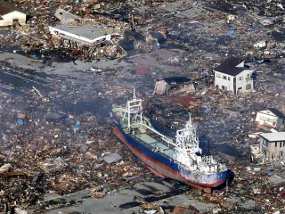
Already two weeks passed, since the earthquake and tsunami destroyed the Japanese, the country with the world's third largest economy. Certainly disrupted economic sectors, including businesses in the country. Direct their business decline.

But as reported by Forbes, the billionaire Japan remains eager to provide assistance to the victims of the earthquake and tsunami.

Here is a collection of Japanese conglomerate the affected and their efforts help to others.

Tadashi Yanai, worth U.S. $ 6.3 billion

Shares of the company, Fast Retailing fell 20 percent after the earthquake, and reduce the U.S. $ 1.3 billion of his fortune. Despite the loss, he personally gave $ 12 million, which seems to be the largest individual contribution to the recovery of Japan. Group retail has mendonasikn U.S. $ 8.6 million in the form of clothing to the victims and cash of U.S. $ 5 million. This apparel retailer plans to collect donations in the donation box in 2200 the company Uniqlo, Theory, and other stores around the world.

Tadashi Yanai and family have a wealth of U.S. $ 7.6 billion. In Japan he became the second richest person according to Forbes magazine, while the world he is ranked 122.

Masayoshi Son, the wealth of U.S. $ 8.2 billion

more article

Eight Surprises that hits the World Economy


Citigroup warned all countries around the world, including Indonesia, to begin to be aware of the emergence of the expected eight surprise hit the global economy.

Eighth surprise is that economic conditions related to one another. A total of seven shock is a condition that is closely interlinked with the other, while one other surprises will certainly worsen the situation which previously had been severe.

Here are eight surprises that will shake the global economy according to Citigroup analysts, Gullermo Felices, as quoted from page VIVAnews.com Business Insider.

1. Jump in food prices in developing countries.

This economic shock will begin from countries like China and India, the price of food continues to climb higher. The price increase was due to various factors such as food production is lower than expected due to climate change and increased demand as the impact of the strengthening economy of developing countries.
2. The high interest rates and tight liquidity in developing countries.
A number of developing country governments to respond to rising food inflation due to the tightening of economic policy.

For example, China continues to increase foreign reserves and higher interest rates. India, South Korea, and Brazil also continued interest rate hikes. Although the conduct policy, no one can guarantee that the choice of these countries will succeed.

Prices of food and other commodities such as fuel oil is often not affected by monetary policy.

3. The political crisis in the Middle East.
The increase in food prices is one factor causing demonstrations in the Middle East countries. The condition worsened with the leaking of some confidential documents on WikiLeaks and protests by a protester set himself on fire in Tunisia in the middle of the economic fundamentals are in difficulty.

4. Ballooning oil prices.

Unstable political conditions in the Middle East have pushed crude oil prices rise. The increase was caused world markets such as China and India, which had previously been the monetary tightening in anticipation of the increase, and developed countries like Europe and the United States affected.

5. Rising interest rates in developed countries.

Developed countries are now beginning to think to raise interest rates as a step in anticipation of increased oil and food prices. This step will certainly end the policy of the ease of liquidity that has been running since the financial crisis.

European Central Bank (the ECB) will likely raise interest rates at a meeting beginning next April. Bank of England will also make a similar move in response to a spike in inflation.

6. The end of quantitative easing policy in the U.S..

Quantitative easing vol 2 is a program of the U.S. government to buy the bonds and will expire in June. The impact of the end of this program is U.S. monetary policy to be more stringent.

The U.S. government is not going to raise interest rates. However, the end of this policy is clearly marked the end of a more loose liquidity policy that had been enough to affect the market grow taller.
7. Cutting fiscal and external debt crises.

At a more loose liquidity policy will end, a number of countries in the Atlantic also plans to cut fiscal spending due to fears of foreign debt.

Withholding tax is clearly visible in some countries in Europe, with countries such as Greece and Ireland have asked the International Monetary Fund (International Monetary Fund / IMF) and the European Union to consolidate its finances. However, European countries also witnessed the efforts of the Spanish government threatened the same problem.

On the other side of the country, parliament United States now is struggling to cut budgets that affect the reduction in fiscal stimulus.

All this incident shows is the lack of impact of government efforts to boost the economy and not a single country whose economy is completely recovered.

8. Among the various economic shocks that will hit the global economy, natural disasters in Japan is the biggest worry for the world economy.

In addition to the many deaths and damage suffered by Japan due to earthquakes, tsunamis, and the explosion of a nuclear reactor. Japan's biggest threat for the world economy is the issue of reduced production and supply of goods from Japan.

Japan is also likely going to need an additional supply more oil as an effort to meet the energy needs due to the ongoing improvement of nuclear power plant (NPP). These conditions add to the weight problem of rising world crude oil prices.

World Bank Improve Infrastructure Partnership Program in Indonesia


The World Bank plans to transfer its partnership program with Indonesia, one of them into the infrastructure sector. Changes in the agreement because Indonesia is considered to be middle income.

World Bank Executive Director Hekinus Manao said last week agreed a new World Bank Country Partnership Strategy (CPS) or the map of cooperation between the Indonesian government with the World Bank emphasis on four things, one infrastructure.

"First of improving the investment climate. Then the construction of basic infrastructure, the World Bank's support to Indonesia related to climate change, and to maintain fiscal stability in Indonesia," he said when met at the Tax Directorate General Headquarters, Jalan Jenderal Gatot Subroto, Jakarta, Friday (18 / 3 / 2011).

Hekinus menila, i the construction of basic infrastructure is becoming one of the points that will be strengthened collaboration between the government and the World Bank. So there is a possibility of cooperation style shifted from being a support of some basic programs that have been conducted such as the School Operational Assistance (BOS), the PNPM Mandiri, and other programs.

"If (the programs) that can be taken over pure state budget, then the pattern of cooperation with the World Bank we are sliding into a more fundamental such as infrastructure and so on. It appears that there is a perception out there," he said.

Hekinus states, on the next occasion he will sit down with the Indonesian government because it was passed in the council (board) director of the World Bank. Therefore, these programs are expected to be effective from 2012.

"When we are also prepared to sit down with the Indonesian government. So it's not coming there and then the bank makes its own world. Just who had the strategy is the WB. So Indonesia is a party that consulted," he said.

Regarding the project objectives, Hekinus CPS said in the book are not explained specifically. But already there are lines of magnitude. For example in the field of transport infrastructure, energy infrastructure, telecommunications infrastructure. Similarly when asked about the pattern of financing these infrastructure projects. Hekinus stated that the current CPS was not until the calculation of the figures because it had just agreed.

"Technical, will be discussed at any time. Because Indonesia has moved from the IDA countries (economically weak country) become a better country, "he said.

Hekinus explain the reason for the shift of these partnerships is indeed a partnership strategy with the World Bank Indonesia was supposed to be updated. In the CPS book that will be a kind of lamp construction to Indonesia has set the current infrastructure development because Indonesia has become a middle income country and the country is no longer a donor recipients who enter the category the International Development Association (IDA). IDA is a country that needs help because its economy is very weak.

"We (Indonesia) have gone up the class into the IBRD. So it continues to be encouraged so that we become a middle income country. Do not let a middle income country but stuck back into IDA," he concluded.

The World Bank Japan Value of a Strong Nation


The World Bank considers Japan is a nation strong. Thus the World Bank is not too worried about the condition and the recovery of Japan after the earthquake and tsunami.

"We know they are high resilience are recognized nation, the World Bank baseball too worried," This was revealed by World Bank Executive Director Hekinus Manao when met at the headquarters of the Directorate General of Taxation, Jalan Jenderal Gatot Subroto, Jakarta, Friday (18/03/2011).

However, the World Bank is ready to assist Japan if needed.

"Certainly anytime the World Bank is ready to back up the Japanese and I could communicate with the executive director of the Japanese and they will prioritize their internal resources but it is also possible assistance, loss is among schemes of cooperation with the World Bank," he said.

Such assistance, continued Hekinus, will be taken from the Trust Fund. Trust Fund is a fund-raising container member countries of the World Bank.

"Some names, such as in Aceh Trust Fund. So members of the World Bank entrusted to create a Trust Fund," he said.

Popular Posts Today